Quick Summary
Dzukou Valley is a high-altitude grassland trek on the Nagaland-Manipur border, known for its rolling meadows and the rare Dzukou Lily. It’s a moderate trek, doable by most fit beginners, but it needs an Inner Line Permit and some real planning around weather. Here’s the short version before you read the full guide:
- Best time: November-February for clear, dry trails; June-early July for the Dzukou Lily bloom
- Base point: Kohima, reached via Guwahati or Dimapur
- Two route options: Viswema (easier) and Jakhama (steeper, shorter)
- Inner Line Permit (ILP): is mandatory for all non-resident Indian citizens
- Ideal duration: 4 days, 3 nights including Kohima sightseeing
- Cost: Varies by season, group size, and how far in advance you book – check current rates at the time of booking
Why Dzukou Valley Is Not Like Any Other Trek You’ve Done
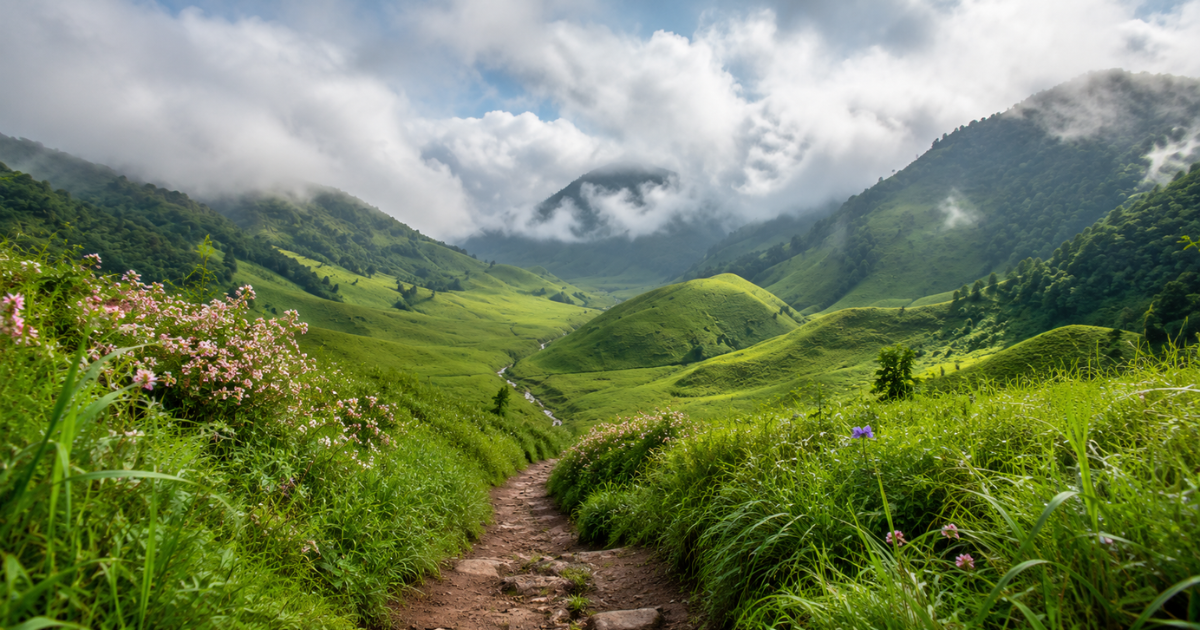
Most treks in India build up to some kind of peak. Dzukou does the opposite, it sorta flips the whole idea. You climb for a couple hours, through steep forested terrain, and then the trail goes level and you end up in a valley that stretches for kilometres in basically every direction. There’s no summit, no real, single viewpoint to stare at — just an open rolling grassland that sits quietly at 2,452 metres.
Even the name is odd, like it came from somewhere else. In the Viswema dialect of the Angami Nagas, “Dzükou” is said to mean something like “dull and soulless.” The earliest settlers gave it that label because the ground couldn’t be farmed, or even properly lived on. Standing in the valley now, that meaning feels almost like a joke nature pulled on the folks who named it, for no reason at all.
Did You Know? The Dzukou valley isn’t just a Nagaland attraction – it straddles the border of Nagaland and Manipur, and its floor sits at an altitude of 2,438 m (7,999 ft) above sea level.

What actually makes this trek special:
- Home to the Dzukou Lily (Lilium chitrangadae) – a flower found nowhere else on the planet
- A landscape that shifts completely with the seasons, from lush green to frost-white
- Bamboo groves, rhododendron patches, and streams running through the valley floor
- Far fewer crowds compared to popular Himalayan treks, even in peak season
- A genuinely moderate difficulty level, so it’s approachable for first-time trekkers with reasonable fitness
Best Time to Visit Dzukou Valley
Search around a bit and you’ll bump into conflicting advice-like some sites say November to March, then June to September is the best. Honestly both can be right, but in different ways, because what you want out of the trek matters, like a lot. It depends on what you’re actually chasing on the trail, and not just the dates on a page.
Monsoon Season (May to September)
This is when the valley turns a deep, saturated green, and the Dzukou Lily blooms usually peaking in the last week of June, through mid-July. It’s like the season for all those postcard worthy photos being taken.
- Pros: Lush landscape, wildflowers in full bloom, waterfalls at their fullest
- Cons: Slippery trails, active leeches, occasional visibility issues from cloud cover
Winter (November to February)
The trail dries out completely, the skies stay clear, and the grass gets this frosted straw gold sort of look over night. At night it gets genuinely chilly too, so this is not the time to under pack.
- Pros: Dry, stable trails and sharp mountain views
- Cons: Near-freezing night temperatures, no monsoon bloom to see
A nice bonus with this window is that it overlaps with Nagaland’s Hornbill Festival (December 1–10), so you can merge the trek with the state’s main cultural gathering, without having to tack on extra travel days.
Shoulder Months (April-May and Late October)
These weeks split the difference – drier than monsoon season, yet warmer than deep winter, and you’ll see early blooms starting to show up. A decent choice if you’re after a steady middle ground, not some extreme swing.
Confused About the Right Time to Trek Dzukou Valley?
Skip the guesswork on weather, permits, and route selection. Get a season-matched Dzukou Valley itinerary planned by trekkers who know the trail in every month of the year.
How to Reach Dzukou Valley
Almost every trekker starts from Guwahati, since it’s the main air and rail gateway to the Northeast. From there:
- Guwahati to Kohima: around 340 km by road, roughly 7 hours along NH-27
- Alternative: fly into Dimapur, then drive about 2 hours to Kohima
- From Kohima: a further 20-27 km road journey to either Viswema or Jakhama village, where the actual trek begins
Kohima works as your staging point – this is where you’ll rest, sort permits, and pick up any last-minute trekking essentials before heading to the trailhead.
Viswema Route vs Jakhama Route: Which One Should You Pick
Both villages lead into the same valley, but the climb itself feels different depending on which one you start from.
Viswema Route
- The more popular, beginner-friendly option
- A motorable road cuts down the walking distance before the trek starts
- Roughly an hour of steep climbing, followed by a longer, gentler stretch
- Total trekking time: about 3.5 to 5 hours to reach the guesthouse
Jakhama Route
- Steeper right from the start, on a rugged, stone-cut path
- Runs through dense bamboo forest, with far less foot traffic
- Shorter in distance, but noticeably tougher on the legs
A lot of seasoned trekkers do this same trick, go up through Viswema (an easier climb, well compared), and then come down via Jakhama s stone steps, which feel way more doable on the descent than on the way up. This way you also end up seeing and walking both trails, in one trip.
Inner Line Permit (ILP): What You Actually Need
This is the part travellers underestimate the most. Every Indian citizen who isn’t a resident of Nagaland needs an Inner Line Permit to enter the state, and it’s not something to sort out at the last minute.
- Apply online through the official Nagaland ILP portal using a government photo ID and a passport-size photo
- Or apply offline at Nagaland House offices in Delhi, Kolkata, Guwahati, and Shillong, or on arrival in Dimapur and Kohima
- Tourist ILPs are typically valid for 15-30 days, and can be extended at the Deputy Commissioner’s office if needed
- Foreign nationals don’t need a separate Restricted/Protected Area Permit for most of the year, but must register with the local Foreigners’ Registration Officer after arrival.
If you’re travelling in the Hornbill Festival window, processing can slow down pretty noticeably, because there’s so many applications. Apply a few days ahead, or let your tour operator handle it for you — honestly it’s one of the more useful things a local operator takes care of.
A Realistic Day-by-Day Itinerary
Here’s how a well-paced Dzukou Valley trip typically breaks down over four days:
Day 1: Guwahati to Kohima
A long travel day, roughly 7 hours by road. Use the evening to rest and acclimatise rather than rushing into sightseeing – this makes a real difference for the climb two days later.
Day 2: Kohima Sightseeing
- Kohima War Cemetery – a quiet, moving site marking the WWII battle that halted the Japanese advance into India
- Kisama Heritage Village – the cultural showcase of Naga tribes, and venue of the Hornbill Festival
Day 3: The Trek
Drive to the trailhead, then climb through steep, forested terrain for around two hours before the trail opens into the valley. Most itineraries build in time at the sunset viewpoint, followed by an overnight stay at the valley guesthouse or in tents.
Day 4: Return Journey
Head back toward Guwahati or Dimapur for departure. If your schedule allows, a stop at Kamakhya Temple on the way is worth the short detour.
What to Pack
The valley’s weather can change within hours, and there’s no electricity once you’re inside it, so pack with some redundancy:
- Quick-dry trekking pants and moisture-wicking base layers
- Fleece or down jacket, plus thermal layers for winter treks
- Waterproof windcheater or poncho – essential during monsoon
- Sturdy trekking boots with ankle support, plus camp sandals
- Woolen cap, gloves, and spare socks
- Trekking poles for the steeper sections
- A sleeping bag rated for near-freezing temperatures if camping in winter
- Power bank and headlamp – there’s no charging point inside the valley
- Water purification tablets or a filter bottle
- Personal medication, sunscreen, and a small first-aid kit
Mistakes People Make on This Trek
- Skipping acclimatisation and heading straight to the trek from the plains
- Underestimating monsoon trails – leeches and slippery stone paths are real between May and September
- Leaving the ILP for the last minute, especially risky during the Hornbill Festival period
- Packing for one type of weather when the valley can shift within hours
- Assuming shops or cafes exist along the trail – facilities are minimal past Kohima, so carry your own snacks and water
Should You Trek Independently or With a Local Operator
Plenty of people do this trek solo, and it is absolutely possible. But like, three things always seem to throw a wrench in it for independent trekkers: getting the ILP sorted without local contacts, arranging camping gear and porters for the valley’s cold nights and managing the Guwahati-Kohima-trailhead logistics without a private vehicle.
A local operator that knows the Northeast – with drivers familiar with the NH-27 route, established permit contacts in Kohima, and guides who’ve done that climb more times than they can really count – removes most of that friction. That is basically the whole value of booking locally instead of trying to stitch the whole trip together yourself.
Ready to Trek Dzukou Valley Without the Logistics Headache?
Let local experts handle your ILP, transport, camping gear, and guides – so all you have to do is show up and walk into the valley.
Conclusion
Dzukou Valley isn’t a trek you take just for the difficulty or the bragging rights. It’s a journey you do because, honestly, nowhere else in India looks quite like this — a wide, wind-swept meadow sitting quietly above the clouds. Hovering over the clouds, with a bloom that exists in exactly one location on Earth. Get your timing right, get your ILP sorted early, and choose the trail that matches your fitness level, then the rest of the trip handles itself.
And if you know, skip the logistics and just concentrate on the trek, The Shillong Tours runs a full Dzukou Valley Special plan, covering Guwahati-Kohima transfers, Kisama Heritage Village, permits, guided trekking, and porter help. They put it together with a crew that knows this route up close. The price can change depending on the season, your group size, and how soon you lock it in, so it’s smart to check the latest rates at the time you book.
FAQs About the Dzukou Valley Trek
1. Is the Dzukou Valley trek difficult for beginners?
It’s rated moderate. The climb up, around 2-3 hours of steep ground is the roughest bit. Once you’re in the valley, it feels easy, the walking is mild and mostly flat, so reasonably fit newcomers can do it without too much trouble, generally.
2. How many days are needed for the Dzukou Valley trek?
Most people plan 3-4 days, even with the travel part from Guwahati or Dimapur in, a day for the Kohima sights, the trek itself, and then back again. There is also a rushed day-trip style option from Viswema but, it really isn’t recommended if you actually want to go explore the valley properly.
3. Do I need a permit to visit Dzukou Valley?
Yes, every Indian citizen who isn’t a Nagaland resident, needs an Inner Line Permit, arranged either online via the Nagaland ILP portal, or offline through Nagaland House offices in Delhi and Kohima.
4. What is the best month to see the Dzukou Lily in bloom?
Late June through the first two, three weeks of July often ends up being the peak blooming time, but the exact window may move a little depending on that year’s rainfall.
5. Is Dzukou Valley safe for solo female travellers?
Generally yes, but with the usual trekking precautions stick to the marked trails, avoid going off on your own after dark, and consider a local guide, which most operators include as standard.
6. Where do trekkers stay overnight inside the valley?
At the Dzukou Valley guesthouse, or else in tents. Riverside camping was, in the past, banned because of littering worries, and honestly it was a mess, so now the guesthouse and the designated campsite are really the only choices.
7. How far is Dzukou Valley from Guwahati?
It’s about 340 km to Kohima by road, more or less a 7 hour drive, and then there’s another drive plus a trek to actually reach the valley itself.
8. Can foreigners visit Dzukou Valley?
Yes, foreign nationals don’t have to get that separate Restricted Area Permit for most of the year anymore, but they are still required to register with the local Foreigners’ Registration Officer upon arrival in Nagaland.
9. Is it worth combining the trek with the Hornbill Festival?
If your travel dates are somewhere between December 1 -10, then yeah. Kisama Heritage Village, which is the festival venue, it’s already built into a lot of the usual Dzukou Valley itineraries, on the way towards the trek.
10. What is the cost of the Dzukou Valley trek package?
Pricing depends on season, the group size, what’s included, and also how far in advance you book it. Honestly it’s best to look up the current rates straight with your tour operator when you’re actually booking, not just lean on older posted numbers.